Computer vision to save lives in the port
When someone falls into the water at a quayside, the outcome is decided in minutes. This is how we use existing cameras to detect the incident and coordinate the rescue.
Ports see a constant flow of people: passengers, crews, dockworkers, fishermen and visitors. An accidental fall into the water, especially at night or in cold water, leaves very little time to react. The key is not only the rescue itself, but finding out in time.
The problem: nobody watches every camera at once
Most ports already have dozens of CCTV cameras, but no human operator can monitor them all continuously. When someone falls into the water, the alert usually arrives late, by phone, and without a precise location.
The solution: automatic detection and dispatch of the nearest resource
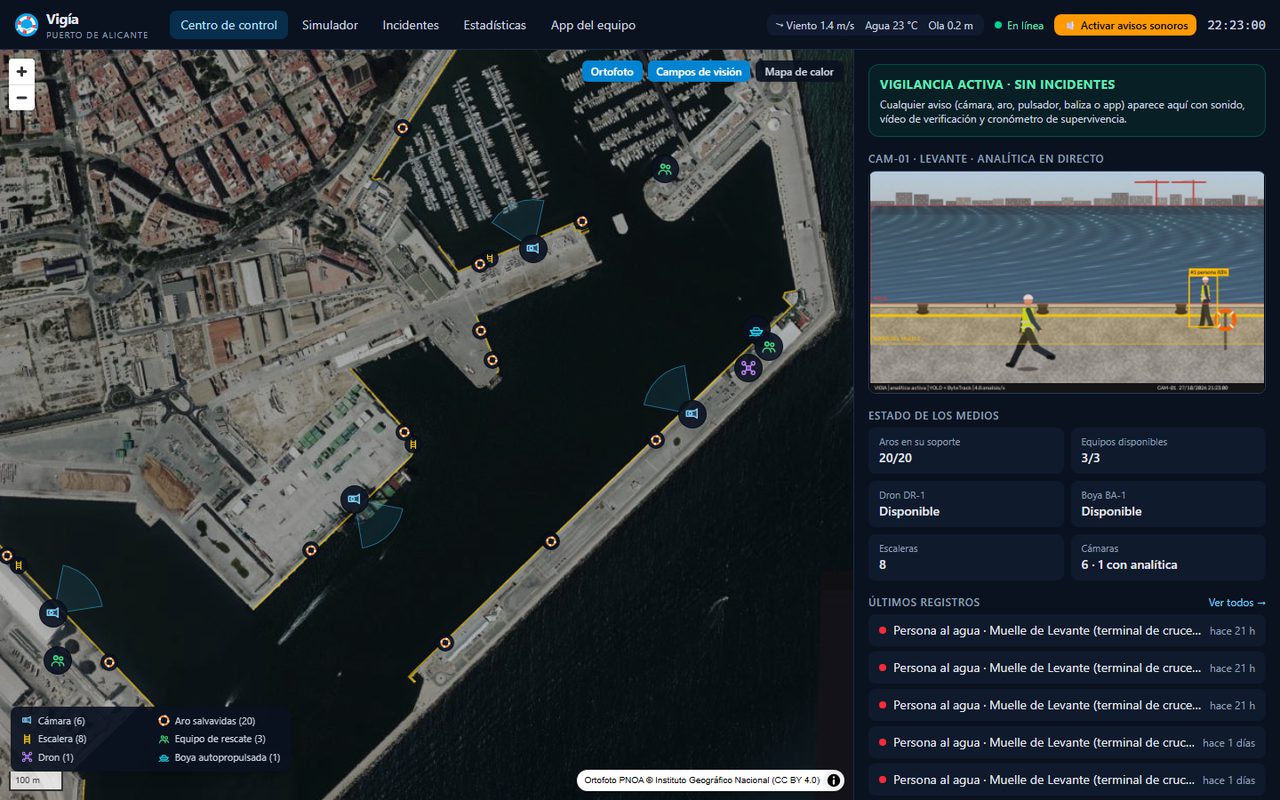
At Vigía we apply person detection and tracking models to the existing cameras. When the system identifies a possible fall, it raises an alert with a verification video clip so the operator can confirm it in seconds, without false positives overwhelming the team.
Once confirmed, the platform works out which resource is closest — lifebuoy, self-propelled buoy, drone or rescue team — alerts it through its app and guides the response with a survival timer based on the 1-10-1 rule.
- Computer vision detection with verification video
- Standardised alerts (CAP) to integrate with other emergency systems
- Drift calculation using weather and current data
- Automatic incident report with a complete timeline
Privacy by design
The models process the video to detect people and movement, not to identify anyone. Only the footage linked to an incident is retained, and every access is logged. This approach makes it possible to comply with the GDPR and CCTV regulations without compromising on safety.
Training through drills
An emergency system only works if the team is confident using it. That is why Vigía includes a drill mode for launching simulated incidents and measuring the response times of each exercise.
Case study
Vigía
Uses AI to detect anyone falling into the water and guides the rescue against the clock.