Spec-Driven Development: building software with AI without losing control
Coding assistants speed up development, but without clear specifications the outcome is unpredictable. Here is how we work.
AI coding agents have changed the speed at which software can be built. But speed without direction produces code that is hard to maintain. At Mente Neural we follow Spec-Driven Development (SDD): the specification sits at the heart of the project, and AI is a tool for implementing it.
What is Spec-Driven Development?
It is a way of working in which every feature starts with a written specification: what problem it solves, who uses it, which business rules apply and how we will know it works. From there, a technical plan is drawn up and broken down into tasks, and each task is implemented and verified against the specification.
- Specification: the what and the why, validated with the client
- Plan: architecture, data and integration decisions
- Tasks: small, reviewable units with acceptance criteria
- Implementation and verification: code, tests and a demo
Benefits for the client
The client takes part in what really matters — the rules of their business — without needing any technical knowledge. Every change can be traced from the specification to the code, which reduces misunderstandings and makes the system easier to audit later on.
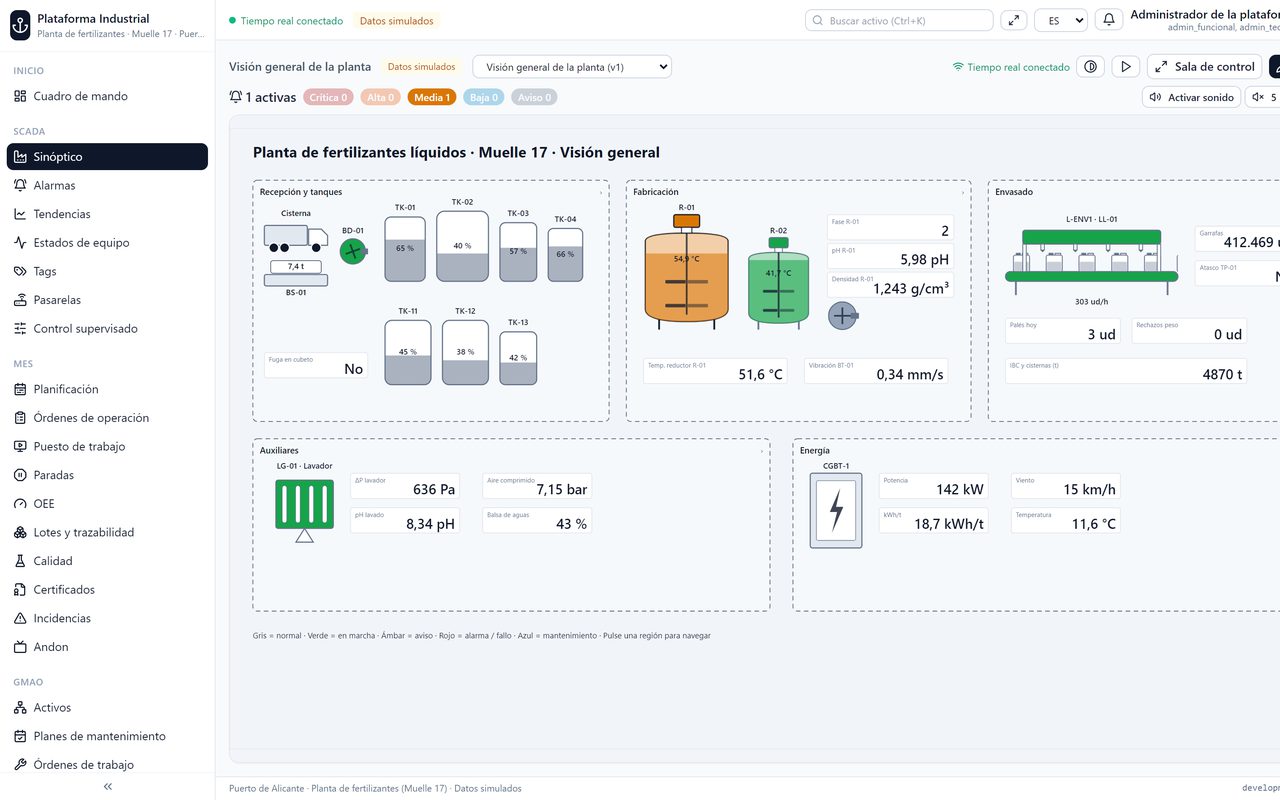
On our industrial platform for a fertiliser plant, for example, we work with more than twenty specifications covering everything from SCADA mimic diagrams to batch genealogy and predictive maintenance.
AI as an accelerator, not an autopilot
Specifications give AI agents precise context to work with and give people concrete results to review. That way we get the best of both worlds: the productivity of AI and the judgement of an engineering team.
Case study
Industrial Platform
Monitoring, production, quality and maintenance in a single tool.